
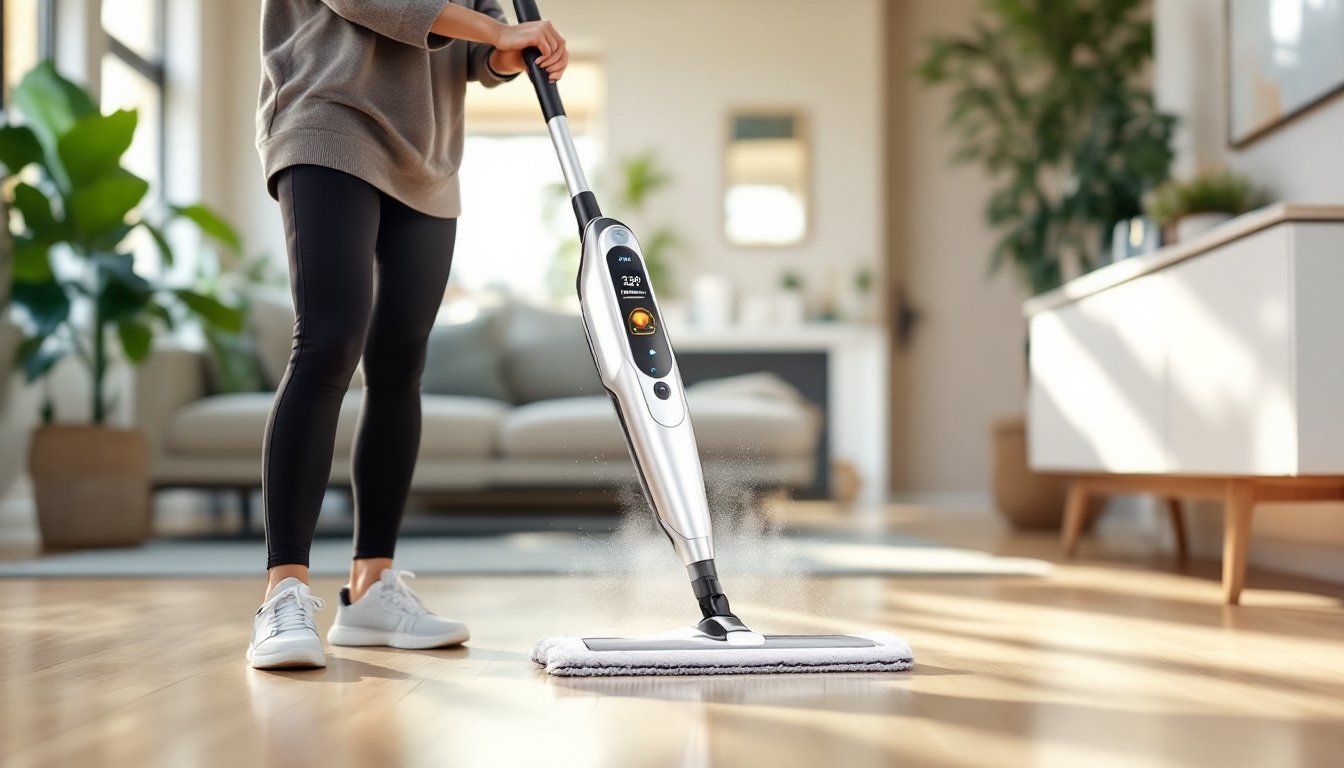
Keeping floors spotless has always been a core responsibility of homeownership, but traditional mopping methods are outdated and inefficient. A smart steam mop combines heating technology with app-based controls, allowing homeowners to sanitize floors throughout their house without chemicals or excessive water waste. Unlike conventional steam mops, these intelligent devices connect to your smartphone, let you adjust temperature settings remotely, and often feature scheduling options for hands-off cleaning. For homeowners seeking a modern, efficient cleaning solution, understanding how smart steam mops work and what features matter most can transform your floor maintenance routine from tedious chore to automated convenience.
Key Takeaways
- A smart steam mop connects to your smartphone via Wi-Fi and voice assistants like Alexa, enabling you to schedule cleaning, adjust temperature remotely, and receive maintenance alerts without lifting a finger.
- Smart steam mops sanitize floors by heating water to 130°F–180°F, killing up to 99% of germs and bacteria without chemicals, making them safer for families with children and pets.
- Smart steam mops operate efficiently using only 1,500 watts and consume just 300–500 milliliters of water per session, offsetting the $300–$900 upfront investment through reduced detergent costs within 2–3 years.
- Rapid-heating technology allows smart steam mops to reach operating temperature in 30–90 seconds, while dual-tank systems separate clean water from waste water for improved hygiene and consistent performance.
- Choose a smart steam mop based on your home’s square footage, Wi-Fi signal strength, and floor type—larger homes benefit from tanks over 800ml, while hardwood and laminate require lower moisture settings to prevent damage.
- Smart steam mops eliminate physical strain on joints and back, transforming floor maintenance from a tedious chore into an automated convenience that frees up time for modern, busy households.
What Is A Smart Steam Mop And How Does It Work?
A smart steam mop is an electric cleaning device that heats water to produce steam, which sanitizes and cleans hard flooring without the need for chemical cleaners. The steam loosens dirt, grime, and allergens from the floor surface, while the mop pad wipes away the residue. What sets a smart steam mop apart from traditional models is its connectivity, it connects to your home Wi-Fi network, allowing you to control it through a mobile app or voice assistant.
The basic operation follows a straightforward process. You fill the water tank (typically ranging from 300 to 1,500 milliliters depending on model capacity), plug the device into an outlet, and wait for the heating element to reach the desired temperature, usually between 130°F and 180°F. Once heated, the steam releases through the mop head onto your floors. The microfiber or cloth pads absorb the moisture and dissolved grime, leaving surfaces clean and nearly dry. Smart models let you preheat the device remotely via your phone, set cleaning schedules, or receive alerts when the water tank needs refilling.
For homeowners with larger floor areas or busy schedules, this hands-off scheduling feature eliminates one more daily task. The sanitizing power of steam alone kills up to 99% of germs and bacteria without bleach or ammonia, making it safer for households with children and pets.
Key Features That Make Smart Steam Mops Stand Out
Smart App Control And Connectivity
The defining feature of a smart steam mop is its app connectivity. Most models connect through standard 2.4GHz or 5GHz Wi-Fi bands and require a proprietary mobile application (iOS or Android) for remote control. From your phone, you can power the device on or off, set cleaning schedules for specific times, adjust steam intensity levels, and receive notifications when maintenance is needed.
Voice assistant integration is increasingly common, many smart steam mops work with Alexa or Google Home, letting you start a cleaning cycle with a simple voice command while your hands are full or you’re away from home. This integration appeals to homeowners who’ve already invested in smart home ecosystems. Some advanced models offer geofencing, which automatically triggers a cleaning session when you leave home or return, ensuring floors are fresh before you walk in.
Advanced Heating Technology And Efficiency
Smart steam mops employ rapid-heating elements that reach operating temperature in 30 to 90 seconds, significantly faster than older models. Brands like Shark and Bissell use titanium-coated heating plates and dual-tank systems to separate clean water from waste water, improving both efficiency and hygiene. The dual-tank approach keeps the dirty water isolated, preventing contamination of the cleaning solution.
Energy efficiency is measurable and substantial. A smart steam mop uses approximately 1,500 watts during operation, less than a typical vacuum, and the fast heat-up time means you’re not waiting around burning electricity. Water usage is also minimal: most sessions consume only 300 to 500 milliliters of water per cleaning, making this option economical over time. Product reviews from testing experts confirm that newer smart models deliver consistent heat and steam output, reducing the need for multiple passes over the same floor.
Why Smart Steam Mops Are Perfect For Modern Homeowners
Modern homeowners juggle competing demands, work, family, and maintaining a clean home often feel mutually exclusive. A smart steam mop solves this friction by automating a routine task. Schedule your mop to run while you’re at work, and you return to clean floors without lifting a finger. For families with allergies, pet owners, and those who dislike chemical odors, steam cleaning without detergents is a genuine health benefit.
The sanitizing capability matters more post-pandemic. Steam reaches temperatures that denature bacteria and viruses, providing confidence that your home’s most-trafficked surfaces are truly clean, not just dust-free. Parents appreciate that kids and pets encounter no chemical residue after cleaning, the mop leaves floors damp but toxin-free.
Smart steam mops also adapt to different floor types. Hardwood, laminate, vinyl, tile, and stone all respond well to properly controlled steam and pressure, though you’ll adjust settings per surface to avoid water damage to sensitive materials. The learning curve is minimal compared to traditional mopping, and the physical strain on joints and back is eliminated. Home technology reviews increasingly highlight how smart cleaning devices free up time for activities that matter more to busy households.
Cost-effectiveness improves over time. While upfront investment ranges from $300 to $900 depending on brand and features, the elimination of ongoing detergent purchases, fewer floor maintenance calls, and extended floor lifespan (due to gentler, chemical-free cleaning) offset that initial expense within 2 to 3 years for most households.
Choosing The Right Smart Steam Mop For Your Home
Selecting the right smart steam mop requires matching a few key factors to your household needs. First, assess your floor layout and square footage. Models with larger water tanks (800+ milliliters) and wider mop heads (12 to 16 inches) suit larger homes, while compact models (10-inch heads, 300-milliliter tanks) work fine for apartments or smaller footprints. Tank capacity directly affects runtime, larger tanks mean fewer refills during a single cleaning session.
Consider your home’s Wi-Fi strength. Older Wi-Fi routers or homes with dead zones may struggle to maintain app connectivity for remote scheduling. Test router placement before committing to a smart model, or ensure your device supports Bluetooth backup controls in case Wi-Fi drops.
Floor type matters. If you have mostly tile and stone, nearly any smart mop works. Hardwood and laminate require lower moisture settings and faster drying times to prevent water damage, look for models that offer distinct hardwood modes or variable steam output. Vinyl plank flooring (LVP) is particularly moisture-sensitive: manufacturers often provide specific guidance on whether their model is compatible.
Brand reliability and customer support are not trivial. Reviews from trusted tech publications help identify models with strong durability ratings and responsive support. Check warranty terms, most reputable brands offer 2-year coverage on the heating element and electrical components. Read owner reviews focused on long-term durability and app stability, as software bugs and lost connectivity frustrate users more than physical wear.
Budget considerations: entry-level smart steam mops cost $300 to $500, mid-range models run $500 to $700, and premium units exceed $800. Avoid the cheapest options if app connectivity is important, these often have unreliable Wi-Fi modules or poorly designed applications. Mid-range models from Shark, Bissell, and Tineco offer the best balance of features and reliability for most households.
Conclusion
A smart steam mop is no longer a luxury gadget, it’s a practical upgrade that saves time, improves hygiene, and reduces your dependence on chemical cleaners. By combining rapid heating, app-based automation, and genuine sanitizing power, these devices deliver real value to busy homeowners. Whether you’re motivated by convenience, health concerns, or environmental consciousness, a smart steam mop fits naturally into the modern home. Take time to identify which features matter most for your floor types and lifestyle, and you’ll find a model that transforms floor cleaning from a chore into an automated convenience.