
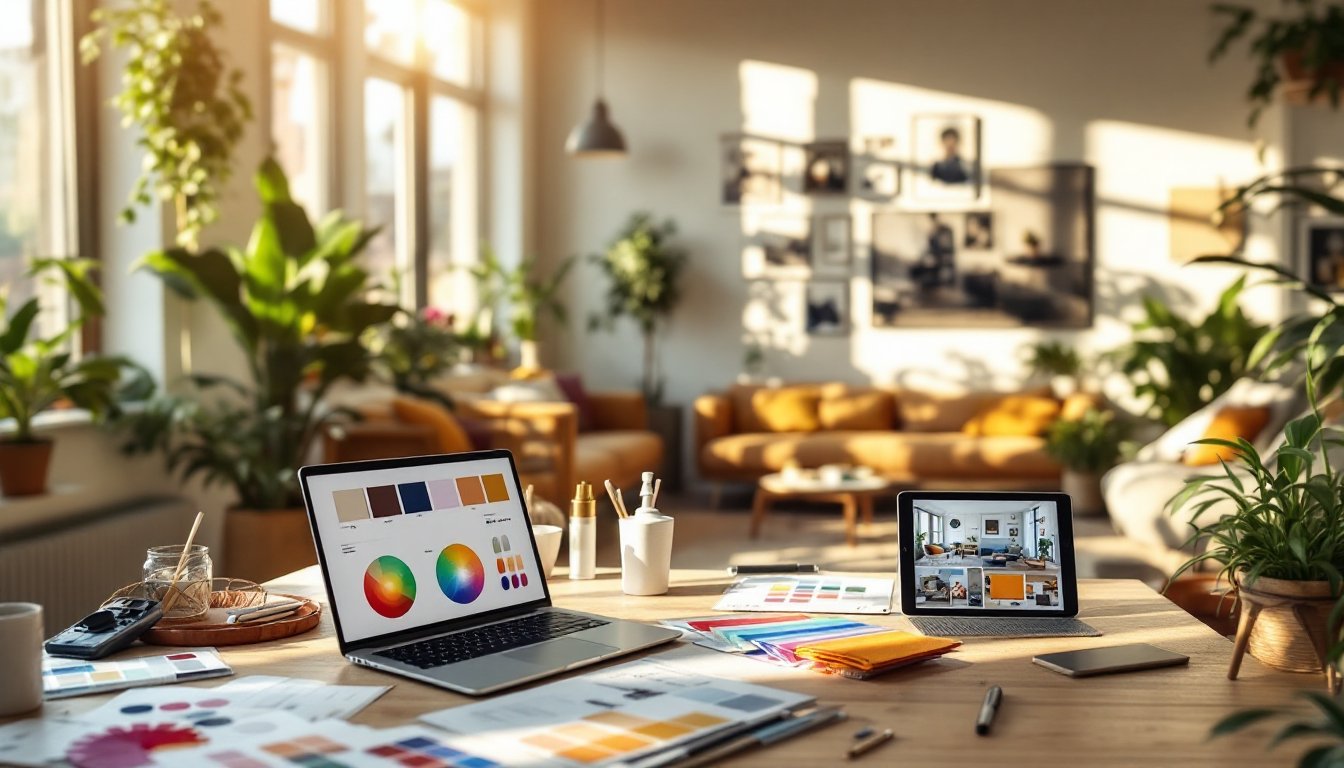
Learning interior design doesn’t require a four-year degree or premium subscriptions to specialized platforms. Whether you’re planning a bedroom refresh, redecorating your living room, or tackling a full home renovation, free online interior design courses put professional techniques right at your fingertips. These courses teach color theory, spatial planning, furniture selection, and styling principles that transform amateur decorating into confident, polished results. For DIY enthusiasts and homeowners ready to take control of their design choices, free interior design classes offer a practical, zero-cost entry point into understanding what makes spaces look intentional and well-designed.
Key Takeaways
- Free interior design courses teach color theory, space planning, and design principles that transform amateur decorating into professional-looking results without requiring expensive certifications or subscriptions.
- Self-paced learning on platforms like Coursera, edX, and Udemy allows DIY homeowners to understand the ‘why’ behind design decisions, preventing costly mistakes like mismatched furniture scale and clashing color schemes.
- Mastering six core design principles—balance, emphasis, movement, proportion, rhythm, and harmony—enables you to diagnose what feels ‘off’ in a room and make targeted, intentional fixes instead of random changes.
- Low-cost adjustments like rearranging furniture, decluttering, testing paint colors in natural light, and strategic lighting deliver maximum impact before investing in new furniture or hiring a professional designer.
- Applying course knowledge through real-world projects—auditing your own space, photographing before-and-after transformations, and documenting progress—reinforces learning and builds confidence for future design projects.
Why Free Online Interior Design Courses Are Perfect for DIY Enthusiasts
DIY homeowners often tackle projects without understanding the design fundamentals that separate amateur work from polished results. A self-taught painter might apply three coats of paint perfectly, but if the color clashes with existing elements or overwhelms the room’s proportions, the effort falls flat. Free online interior design courses fill this gap by teaching the “why” behind decisions, not just the “how.”
These courses work because they’re designed for self-paced learning. You’re not sitting in a classroom on a fixed schedule: you’re watching videos and completing exercises when it fits your life. Many platforms offer certificates of completion without charging a cent, which is perfect for building confidence before hiring a designer or tackling bigger projects. Also, understanding design principles makes shopping for furniture, paint colors, and decor items faster and more intentional, you’ll know exactly what works instead of buying on impulse.
Top Platforms Offering Free Interior Design Training
Several major educational platforms now offer comprehensive interior design coursework at no cost. Platforms like Coursera, edX, and Udemy feature free audit options for design fundamentals classes, though certificate options may require payment. YouTube channels dedicated to interior design provide hourly-long tutorials covering everything from mood board creation to furniture arrangement strategies.
Credible platforms also include design-specific sites offering free lessons in layout, color coordination, and styling. Many of these courses are created by working interior designers and architects, ensuring the content reflects real-world practice rather than theoretical fluff. When selecting a course, look for ones with specific project assignments, applying knowledge to your own space immediately reinforces learning and prevents the common trap of consuming content without implementation.
Skill-Building Basics: Color Theory and Space Planning
Color theory forms the foundation of every interior design course. You’ll learn about the color wheel, complementary schemes, analogous colors, and how lighting affects color perception in a room. This knowledge alone prevents costly mistakes like selecting paint colors under fluorescent store lighting that looks terrible under your home’s natural light.
Space planning teaches you how to measure rooms accurately, account for traffic flow, and arrange furniture to maximize functionality. You’ll understand concepts like the “conversation zone,” focal points, and scale, why that oversized sofa looks wrong in a modest living room or how to make a small bedroom feel spacious through strategic placement. Free classes walk through these principles using real room examples, letting you see transformations before and after applying design rules.
Essential Design Principles You’ll Learn
Most free interior design classes cover six core principles: balance, emphasis, movement, proportion, rhythm, and harmony. Balance means distributing visual weight evenly, a room with all heavy furniture on one side feels physically uncomfortable, even if you can’t articulate why. Emphasis teaches you to create focal points, whether that’s an accent wall, a fireplace, or a statement piece of furniture that draws the eye first.
Movement refers to how your eye travels through a space: good design creates a logical visual journey. Proportion ensures furniture and decor scale appropriately to the room’s size and the human body. Rhythm uses repeated elements, colors, patterns, or materials, to create cohesion. Harmony ties everything together, ensuring all choices feel intentional and connected rather than chaotic.
Understanding these principles changes how you evaluate your own space. When a room feels “off,” you can diagnose why instead of just knowing something doesn’t work. Maybe the proportions are unbalanced, rhythm is broken by too many different patterns, or emphasis is unclear. With this knowledge, you’ll make targeted fixes instead of random changes that waste time and money.
Practical projects included in free interior design classes ask you to audit your own space using these principles. You might photograph a room, identify focal points, analyze color distribution, and propose adjustments. This real-world application cements learning far better than passive video watching. Many learners find that transforming your living space through structured learning directly improves decision-making on future projects.
How to Apply Free Course Knowledge to Your Home Projects
Armed with design fundamentals, start by auditing one room in your home. Photograph it from multiple angles, identify the current focal point, note color distribution, and assess whether furniture arrangement follows logical flow. This baseline comparison reveals exactly what changes will have the biggest impact.
Begin with low-cost adjustments: rearranging furniture, decluttering, and adjusting lighting. Paint is your next lever, a new color scheme derived from color theory costs $50–$100 in materials but transforms the room completely. Before painting, test samples on multiple walls and observe them at different times of day: interior design courses emphasize this step because it prevents expensive mistakes.
When selecting new furniture or decor, apply the principles you’ve learned. Will a new piece maintain balance and rhythm? Does it work with your chosen focal point? Does its scale match the room’s proportions? These questions, taught in any free interior design class, save countless dollars on returns and mismatched purchases.
For inspiration and hands-on techniques, budget makeover sites like Addicted 2 Decorating showcase room transformations using mostly DIY work and thrifted pieces. Similarly, Young House Love documents renovation projects with detailed photo tutorials on painting, furniture arrangement, and styling. Resources like Ana White offer free furniture building plans that align with your design vision without the markup of retail pieces.
Document your own progress with photos before, during, and after your project. This visual record reinforces what you’ve learned and becomes a portfolio showing your growing design confidence. Many people discover that after completing one successful room redesign based on course principles, tackling the next room becomes intuitive rather than overwhelming.
Conclusion
Free online interior design courses remove the barrier between amateur decorating and intentional, polished results. With color theory, space planning, and design principles in your toolkit, your DIY projects gain professional polish without the professional price tag. Start today, pick a course, audit a room, and apply what you learn to a real project. The investment is zero dollars and a few hours: the payoff is spaces you’re proud to show off.