
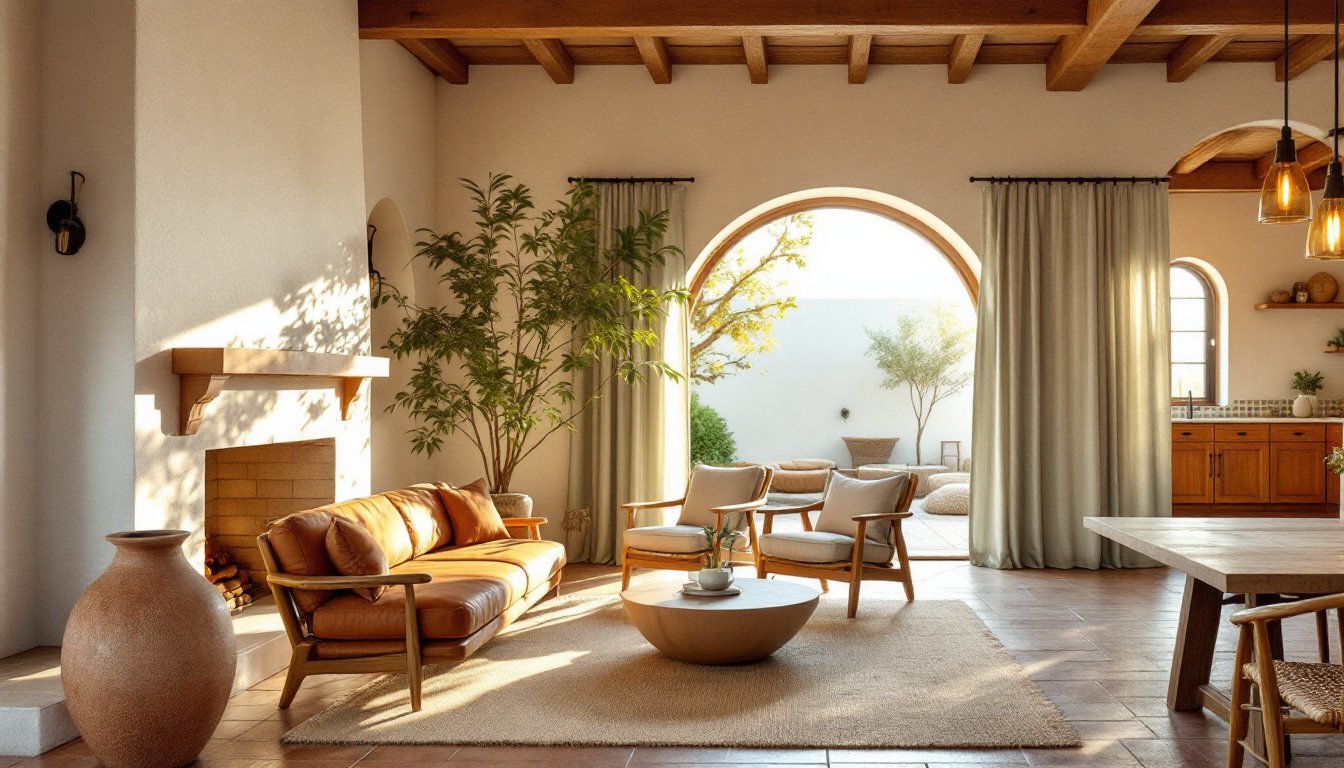
Modern hacienda interior design blends Spanish Colonial heritage with contemporary minimalism, creating homes that feel both grounded and refined. Unlike traditional hacienda style, which leans heavy on dark wood, ornate tilework, and saturated earth tones, the modern interpretation strips away excess while honoring the foundational elements: thick adobe walls, courtyard living, and handcrafted details. Homeowners drawn to this aesthetic appreciate the honest materiality and timeless appeal. Whether you’re renovating an existing home or simply refreshing your decor, modern hacienda design offers a practical framework for creating spaces that balance warmth with restraint. This guide walks through the core principles, material selections, furniture choices, and achievable DIY accents to help you craft a hacienda-inspired interior that feels authentic, livable, and current.
Key Takeaways
- Modern hacienda interior design blends Spanish Colonial heritage with contemporary minimalism by respecting tradition while removing visual excess and ornamental heaviness.
- Essential materials for authentic hacienda spaces include terracotta tile flooring, stucco walls in cream and off-white finishes, exposed wooden ceiling beams, and natural stone accents.
- Furniture in modern hacienda interiors prioritizes substantial wood pieces with simple joinery, low-profile leather or linen seating, and hidden storage rather than decorative displays.
- Lighting should be warm and directional with wrought-iron fixtures, aged brass sconces, and uplighting on textured walls to enhance the material-forward aesthetic.
- Achievable DIY projects like limewash texture walls, faux beam installation, terracotta tile borders, and wrought-iron accents can strengthen your hacienda design at a fraction of professional costs.
- The modern hacienda color palette centers on warm neutrals—off-white, cream, soft terracotta, and dusty sage—applied with restraint to maintain visual breathing room and authenticity.
What Defines Modern Hacienda Style
Modern hacienda style starts with a philosophical shift: respect for tradition without its heaviness. The style honors the Spanish Colonial legacy, thick stucco walls, arched doorways, exposed ceiling beams (vigas), but pairs these elements with clean lines, neutral palettes, and edited décor.
Key defining features include exposed wooden ceiling beams (real or reclaimed), stucco or limewash walls in off-white or soft cream, and clay tile accents used sparingly rather than as dominant patterns. Courtyards or outdoor living spaces remain central to the layout, even in smaller homes, creating visual and physical flow between indoors and out. Materials feel authentic and age gracefully, concrete, stone, terracotta, and unfinished wood are preferred over polished finishes.
The furniture arrangement prioritizes low-slung seating, substantial wood pieces with simple joinery, and textiles woven in natural fibers. Iron detailing appears on doors, railings, and light fixtures, but in restrained patterns rather than ornate scrollwork. Modern design inspiration increasingly showcases hacienda homes where negative space matters as much as objects, reflecting a contemporary mindset applied to a historic aesthetic. You’ll find muted color transitions, terracotta to cream to sage, rather than bold contrasts, and storage remains hidden behind plain doors or built-ins rather than displayed as décor.
Essential Color Palettes and Materials
The modern hacienda palette centers on neutrals with subtle warmth. Start with off-white, cream, or soft beige as your base, these are actual paint colors, not design abstractions, and they mimic traditional limewash finishes. Benjamin Moore’s Shaker Beige or Sherwin-Williams Alabaster work well as primers or base coats before finishing with a chalky or matte topcoat to avoid shine.
Accent colors are earthy and restrained: warm terracotta (think clay tile, not orange), dusty sage, soft charcoal, and subtle ochre. These should appear in textiles, wall treatments, or architectural details rather than covering entire rooms. A single accent wall in a soft terracotta limewash can anchor a bedroom: sage-toned linen curtains add color without overwhelming a living room.
Materials ground the space authentically. Terracotta tile flooring (4×4 or 6×6 inch formats) laid in simple running bond patterns works for kitchens and entryways: actual clay tile is porous and requires sealing, but its warmth justifies the maintenance. For budget or durability concerns, porcelain pavers mimicking terracotta are practical alternatives. Stucco walls (drywall finished with textured stucco compound) add genuine texture without major structural work: stucco is applied over standard drywall in 2-3 coats and finished with paintable texture. Reclaimed or hand-hewn wooden ceiling beams anchor rooms visually: if authentic vigas aren’t feasible, faux beams (foam or wood-effect) mounted to ceiling joists create the look convincingly. Natural stone (limestone, slate, or saltillo) appears in fireplace surrounds, kitchen backsplashes, or accent walls. Home styling guides often recommend mixing one high-impact material, like a feature fireplace in stacked stone, with simpler finishes elsewhere to keep the overall aesthetic balanced and avoid visual clutter.
Furniture and Layout for Hacienda Spaces
Hacienda furniture prioritizes substantiality and longevity over trends. A well-made wooden dining table with simple tapered legs (not ornate turnings) becomes a gathering anchor: solid pine or oak in honey or natural finishes work better than stained or varnished pieces. Pairing it with woven rush-seated chairs or simple upholstered benches keeps the look relaxed rather than formal.
Living spaces benefit from low-profile seating, leather or linen sofas without excessive cushioning, paired with solid wood side tables. Avoid sectionals and modular systems, which read as contemporary rather than hacienda. Instead, position a sofa perpendicular to a fireplace with a pair of armchairs facing inward, creating conversation zones that reflect how haciendas historically organized communal living.
Bedrooms should feel restful, not showroom-styled. A wooden bed frame with headboard panels (either carved simply or plain) topped with a natural linen duvet and minimal pillows maintains authenticity. Avoid upholstered headboards or padded bed frames. Storage should be concealed, wooden armoires, built-in closets behind plain doors, or under-bed chests rather than open shelving displaying décor.
Layout flows from outdoor spaces inward: if possible, position main living areas to overlook patios or gardens. Kitchen islands are less common in hacienda homes: instead, arrange cabinetry (painted in warm whites or soft grays with simple knob hardware) along walls with open counter space for prep work. Interior design tips for this style emphasize visual rest, fewer pieces, more breathing room, and furniture arrangements that prioritize function over symmetry. Avoid clustering small tables or decorative objects: one statement piece (a large terracotta urn, a wrought-iron mirror) does more work than a shelf full of accents.
Lighting and Architectural Accents
Lighting in modern hacienda homes should feel warm, directional, and slightly industrial. Wrought-iron pendant lights with amber or frosted glass shades work over kitchen islands or dining tables: these echo traditional candle-holders scaled up. Brass or blackened-steel sconces flanking mirrors or on bedroom walls add task and ambient light without the clutter of lamps. Avoid shiny brass, brushed or aged finishes age better visually.
Ceiling fixtures should be minimal: a simple iron chandelier (nothing too ornate) or recessed lighting hidden behind beam work keeps the eye focused upward on architectural details rather than fixtures themselves. Uplighting on textured stucco walls or architectural archways enhances depth and warmth in evenings.
Architectural accents differentiate modern hacienda from generic rustic. Arched doorways or window openings (even if added as trim rather than structural arches) reference the original aesthetic. Wooden corbels supporting exposed beams or shelf edges add structural-looking detail. Iron grilles on windows or as room dividers introduce pattern and visual interest without clutter. A fireplace surround in stacked stone or brick remains a focal point: fireplaces should be simple and tall, not squat or overwrought.
Tilework appears subtly, a 3-4 tile border above a kitchen backsplash in hand-painted terracotta or blue-and-white Talavera, not entire walls. Tile should feel intentional and restrained. Consider ceiling details too: exposed wooden beam grids (vigas and latillas, the smaller cross-beams) create visual richness without pattern overload. Keep tile and ornamental iron sparse: the modern hacienda aesthetic relies on material authenticity and proportional restraint, not decorative saturation.
DIY Decor Projects and Final Touches
Several achievable projects strengthen a modern hacienda interior without requiring licensed contractors.
Limewash or textured finish walls: Over primed drywall, apply a stucco texture compound (like DAP Drywall Spackling or Zinsser primer-texture) in 2-3 thin coats with a sponge or trowel, sanding lightly between coats. Finish with a matte paint in your chosen neutral. This mimics traditional limewash without the durability concerns of actual lime. Cost runs $2-4 per square foot: time is 2-3 hours per room plus drying time.
Faux beam installation: Foam or wood-composite beams mounted to ceiling joists with construction adhesive and screws create visual impact. Measure joist locations with a stud finder, mark spacing (typically 4-6 feet apart for visual balance), and secure beams at bearing points. A standard 12-foot beam costs $40-100 and takes 1-2 hours per beam to install. No structural load capacity needed, these are aesthetic only.
Terracotta tile accents: Paint a tile border above a kitchen backsplash or along a bathroom wall. Prep the drywall with primer, lay tiles in running bond using thin-set mortar (follow product instructions for coverage, typically 100 sq. ft. per bag), and grout after 24 hours with a non-epoxy grout in cream or warm gray. Seal afterward with stone sealer if using unglazed tile. Budget 4-6 hours for a 20-foot backsplash border.
Wrought-iron accents: Mount a large mirror in a blackened-iron frame, hang wall sconces, or install a spice rack with iron details. These anchor spaces visually and cost $30-150 depending on size and finish. Use heavy-duty wall anchors (toggle bolts for drywall) if mounting to non-stud locations, and follow manufacturer specs for load capacity.
Natural fiber textiles: Layer a jute or sisal rug under a seating area, drape linen curtains from simple iron rods, and add wool or cotton throw pillows in muted colors. These soften hard surfaces and introduce handmade texture without clashing with the material-forward aesthetic. Interior design trends increasingly favor natural fibers for their tactile warmth and longevity.
Final touches: Keep surfaces mostly clear, a terracotta vessel, a wrought-iron candle holder, books on a low shelf. Edit ruthlessly. Haciendas were lived-in spaces, not museum displays, so comfort and function matter more than styled perfection.
Conclusion
Modern hacienda interior design invites restraint and authenticity into your home. By anchoring your space in honest materials, stone, wood, clay, iron, and a edited color palette, you create an interior that feels both rooted in tradition and contemporary in its clarity. The style isn’t about filling rooms with Spanish Colonial ornament: it’s about understanding the principles behind that heritage and applying them with a modern eye. Start with one room, commit to your material palette, and let genuine details emerge slowly. Your hacienda home will feel more thoughtfully curated, and more timeless, for the deliberation involved.