
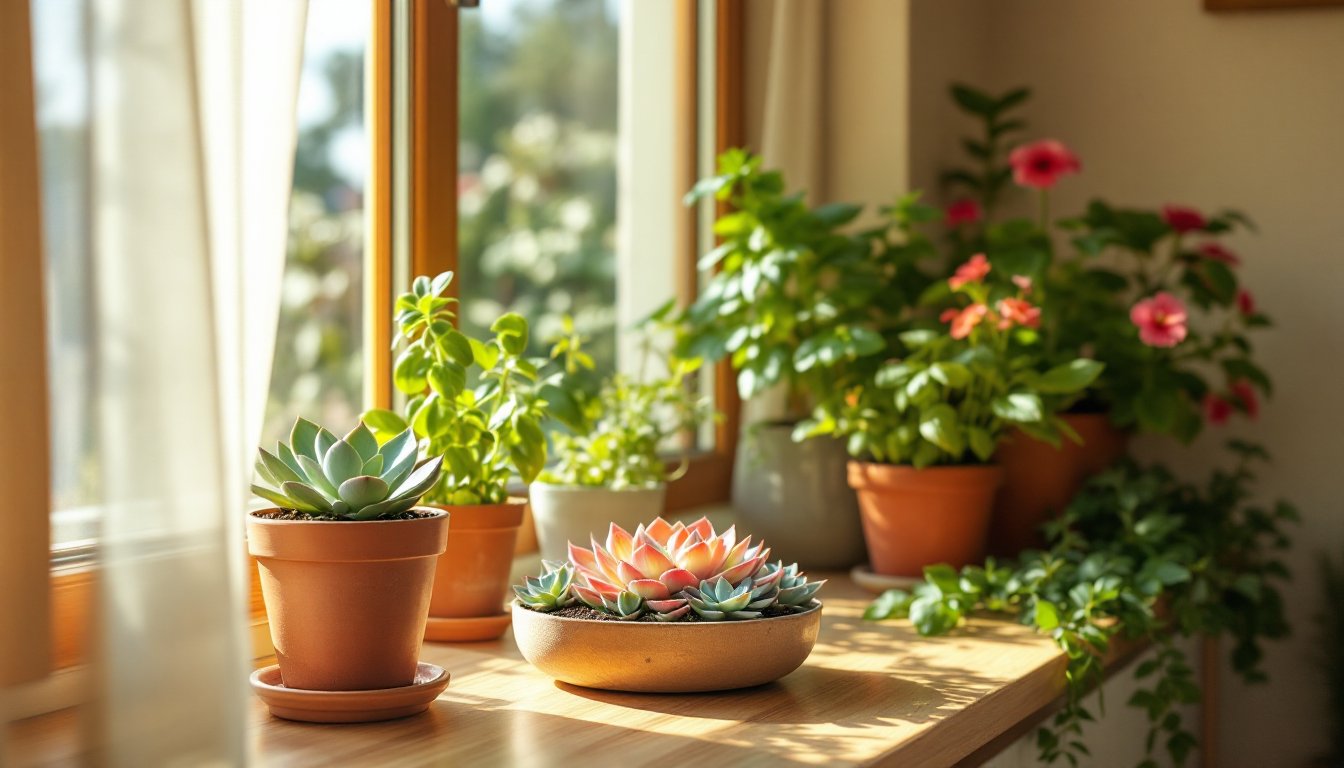
Not every indoor plant can handle a south-facing window or that blazing afternoon sun flooding through your living room glass. But plenty can, and they’ll actually thrive there, giving you lush foliage and vibrant blooms without the leggy, weak growth you get from low-light compromises. If you’ve got a bright spot begging for greenery, you’re not stuck with shade lovers anymore. Direct sunlight plants are often tougher, faster-growing, and more forgiving than their fussy cousins. This guide walks you through the best house plants that love direct sunlight, why light matters in the first place, and how to set them up for success in your home.
Key Takeaways
- House plants that like direct sunlight produce sturdier stems, denser foliage, and more prolific flowers than shade-loving plants, with most flowering varieties requiring 6–8 hours of daily sun to bloom consistently.
- Succulents and cacti are the hardiest direct sunlight plants, thriving on well-draining soil and infrequent watering while developing vibrant colors that intensify under intense light.
- Flowering plants like geraniums, begonias, and bougainvillea demand bright light to perform and reward high-light placement with nonstop blooms throughout the growing season.
- Culinary herbs and edible plants—including basil, rosemary, thyme, and peppers—flourish on sunny kitchen windowsills with 6+ hours of direct sun, turning a simple shelf into a productive mini-garden.
- South and west-facing windows provide optimal direct sunlight for most plants, though careful monitoring prevents heat damage in summer, and regular pot rotation ensures even growth.
Why Direct Sunlight Matters For Indoor Plants
Plant photosynthesis is simple math: more light energy means more food production and faster growth. A plant sitting in direct sun can photosynthesize at peak efficiency, translating that energy into sturdy stems, dense foliage, and prolific flowering. Without enough light, plants stretch toward the nearest window (a behavior called “etiolation”), becoming tall, spindly, and weak.
Direct sunlight also helps regulate growth cycles. Many flowering plants need a minimum of 6–8 hours of direct sun daily to initiate and sustain blooms. In low light, they’ll produce leaves but rarely flowers. Temperature fluctuations near a sunny window can also trigger dormancy or flowering in some species, mimicking natural seasonal cues that potted plants indoors often miss.
That said, direct doesn’t mean “all day every day” for every plant. A south-facing window in summer can reach 90°F+ on the glass and soil surface, which can scorch tender leaves or cook roots if the pot heats up. The right plant in the right window means minimal fuss and maximum payoff.
Succulents And Cacti: The Direct Sun Champions
Succulents and cacti are the heavy hitters of direct sunlight plants. They’ve evolved in harsh, sun-baked environments where they store water in fleshy leaves and stems, making them drought-tolerant and ideal for bright windows. Most can handle 6+ hours of direct sun without complaint and will reward you with compact growth and often stunning color changes as they harden off.
Aloe Vera And Jade Plants
Aloe vera is the workhorse succulent. It grows quickly, tolerates neglect, and produces tall spikes of tubular yellow flowers if it gets enough light (usually after 3+ years). Plant it in well-draining cactus soil, standard potting soil holds too much moisture and invites root rot. A south or west-facing window is ideal: rotate the pot every 2–3 weeks to keep growth even. Water only when soil is bone-dry (typically every 3–4 weeks in growing season).
Jade plants (Crassula ovata) grow into woody shrubs with thick, coin-shaped leaves. They’re nearly indestructible and develop a beautiful reddish tint at leaf edges under intense sun. Jade is slower-growing than aloe but can live for decades with minimal care. Like aloe, it needs gritty, fast-draining soil and light watering. Mature specimens sometimes produce small pink or white flowers. Both plants tolerate some temperature drop in winter, which can actually improve flowering the following spring.
Echeveria And Other Colorful Varieties
Echeveria species are the showstoppers of the succulent world. They form tight rosettes in shades of blue, pink, purple, and coral, colors that intensify dramatically under direct sunlight. Echeveria ‘Imbricata’ (Blue Echeveria) and E. elegans (Mexican Snowball) are popular and forgiving. They bloom on a tall stalk with bell-shaped flowers (usually red and yellow) if given 6+ hours of sun.
Other sun-loving succulents worth considering: Sedum species (especially Sedum morganianum, burro’s tail, with trailing stems perfect for hanging baskets), Aeonium (dramatic architectural forms in dark purple or green), and Lithops (living stones, bizarre but fascinating dual-lobed plants that mimic rocks). All want the same recipe: bright light, gritty soil, and infrequent water.
Succulent pots should have drainage holes and sit on saucers to catch excess water. Check soil moisture by poking your finger an inch deep: if it’s moist, wait another week before watering. In winter, many succulents enter dormancy and need even less water, sometimes just a light mist every few weeks.
Flowering Plants That Love Bright Light
If you want color and blooms, flowering plants are your answer, but they demand light to perform. Unlike foliage plants, which adapt to partial shade, flowering plants are often genetically programmed to bloom only under high light conditions.
Geraniums, Bougainvillea, And Begonias
Geraniums (Pelargonium spp.) are the reliable bloomers. They flower nonstop in a bright window, producing clusters of red, pink, white, or salmon blooms from spring through fall. Pinch back new growth in spring to encourage bushiness, and deadhead spent flowers to extend blooming. They tolerate dry indoor air better than most plants and prefer slightly drier soil between waterings. A south or west window is optimal: in cooler regions, they may need 6–8 hours of direct sun daily.
Bougainvillea is the dramatic choice. Its papery, colorful “flowers” are actually modified leaves (called bracts), while true flowers are small and white. This plant is hungry for light, at least 6–8 hours of direct sun daily. Indoors, bougainvillea is trickier than geraniums because it really wants outdoor conditions or a greenhouse. If you’re committed, a large south-facing window in a room that stays 60–70°F works. Bougainvillea also requires well-draining soil and careful watering: too much moisture causes leaf drop.
Begonias come in two main types for direct sun: wax begonias (Begonia semperflorens), which are compact and reliable with small flowers, and tuberous begonias (Begonia × tuberhybrida), which produce large, showy blooms. Wax begonias are hardy and forgiving, thriving in bright, indirect to partially direct sun. Tuberous begonias are showier but more finicky, they need good air circulation, consistent moisture (not soggy), and humidity. Both appreciate a bit of afternoon shade in very hot climates. Gardening guides at reliable sources detail care for many other direct-sun bloomers, including marigolds, zinnias, and gazania.
Herbs And Edible Plants For Sunny Windowsills
Herbs are underrated as houseplants. Nearly all culinary herbs are sun lovers, and a kitchen windowsill with 6+ hours of direct sun becomes a productive mini-garden.
Basil is the gateway herb, fast-growing, fragrant, and eager to reward you with pinches for your pasta. It needs warmth (65°F minimum) and consistent moisture: let soil dry slightly between waterings but not completely. Pinch the tip regularly to prevent flowering and keep the plant bushy. Simplified guides to growing direct-sun plants often highlight basil as a top performer.
Rosemary, thyme, oregano, and marjoram are Mediterranean herbs that actually prefer drier conditions. They thrive in bright light and well-draining soil, and they tolerate occasional neglect. Water only when the top inch of soil is dry. These woody-stemmed herbs can live for years on a sunny sill.
Mint is prolific but invasive, pot it separately to keep it from overtaking neighbors. It tolerates partial sun better than most herbs and actually appreciates afternoon shade in intense climates. Keep soil consistently moist but not waterlogged.
Peppers (both sweet and hot) and cherry tomatoes also thrive indoors under direct sun if you give them warm temperatures (70–80°F), consistent moisture, and hand-pollination (a small paintbrush or electric toothbrush dusted on flowers works). Flowering may happen in 2–3 months, with fruit following. These are longer-term projects but incredibly rewarding.
All edible plants should be grown in containers with drainage holes, using potting soil (not garden soil). Feed lightly with a balanced or slightly nitrogen-heavy fertilizer during the growing season. Herbs especially benefit from pinching and pruning to stay compact and productive.