
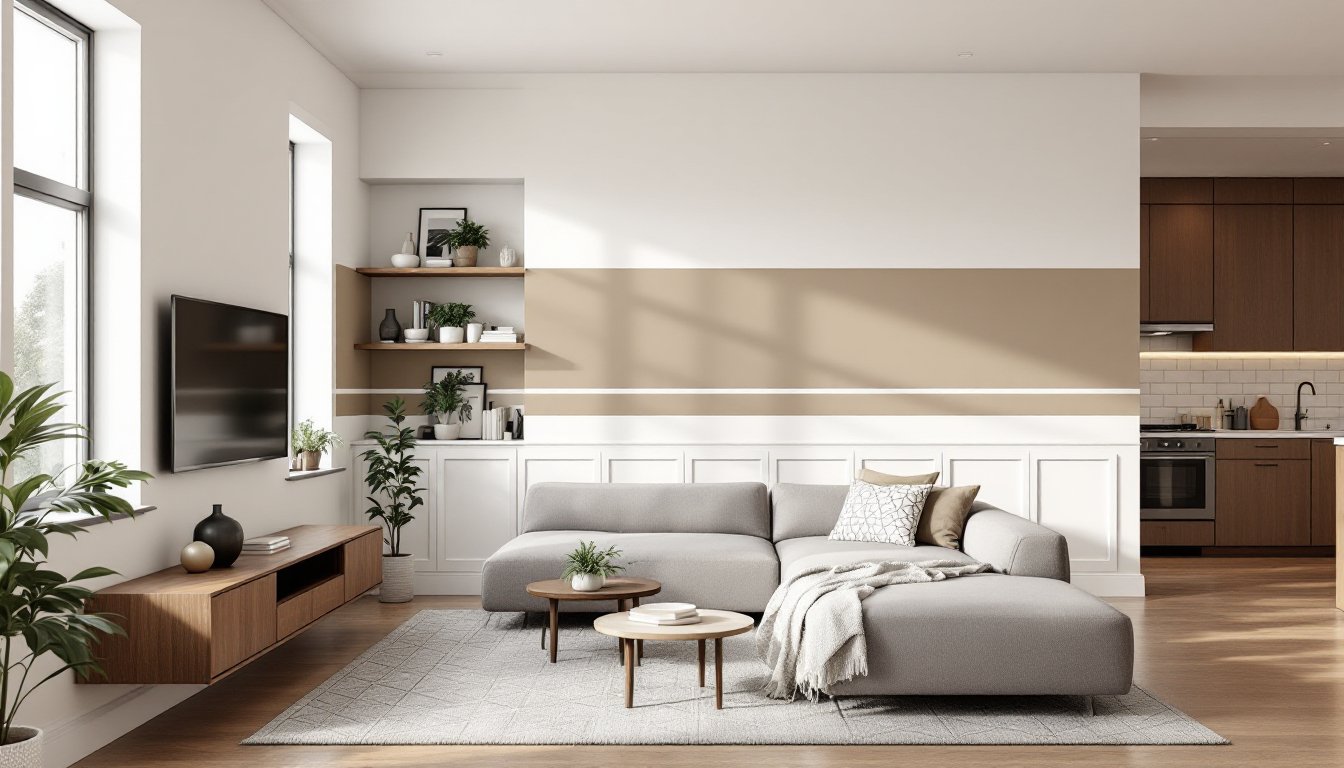
Walk into a room that feels spacious and calm, and odds are horizontal lines are doing the heavy lifting. Whether it’s a stripe accent wall, built-in shelving, or wide baseboards, horizontal elements pull the eye across a space rather than up and down, creating a sense of width and grounding. For DIY homeowners looking to refresh their interiors, understanding how to use horizontal lines is one of the most practical design moves you can make. It costs little, requires minimal tools in most cases, and the payoff is immediate. This guide breaks down what horizontal lines are, why they work, and exactly how to put them to use in every room of your home, without needing a design degree.
Key Takeaways
- Horizontal lines in interior design create visual expansion and make rooms feel wider by drawing the eye across a space rather than upward.
- Horizontal elements trigger psychological calm and stability, making spaces feel more grounded and peaceful, which is especially valuable in bedrooms and living areas.
- You can incorporate horizontal lines affordably using paint stripes, floating shelves, or trim work—most projects cost under $200 and require only a weekend of your time.
- Proper alignment with natural architectural points like window height, door frames, or furniture placement is critical; misaligned horizontal lines create visual confusion.
- Avoid common mistakes like placing too many competing lines, ignoring furniture scale, or skipping prep work—these detract from the sophisticated impact horizontal design can deliver.
- Different rooms benefit from different placements: bedrooms use horizontal lines at headboard height, living rooms at shelving level, and hallways at eye level for maximum impact.
What Are Horizontal Lines and Why They Matter in Design
Horizontal lines are design elements that run left to right across a space, think of a stripe on a wall, a picture rail at eye level, or a floating shelf. Unlike vertical lines (which draw the eye upward and suggest height), horizontal lines create movement across a room, making spaces feel wider and more expansive.
The power of horizontal lines lies in simple optical illusion. Your brain naturally follows the direction of a line: when that line stretches across a room, it unconsciously signals expansion. This is why a narrow hallway suddenly feels less cramped with a horizontal stripe, or why a room with wall-to-wall shelving feels more grounded than one with tall, skinny elements.
They’re everywhere in good design, wainscoting that wraps a room at mid-height, picture rails, chair rails, board-and-batten treatments, bands of contrasting paint, or even the visual weight of a low, wide sofa. None of these require structural changes or fancy materials. Most are purely visual tricks that cost under $200 in materials and a weekend of your time.
The Psychological Impact of Horizontal Lines
Horizontal lines trigger calm. They’re stable, grounded, and restful, think of the horizon line in nature. This is why spaces with strong horizontal elements feel relaxing rather than chaotic. A room with bold horizontal stripes or shelving at consistent intervals creates rhythm and order, which your brain interprets as peaceful.
This matters in bedrooms and living areas especially. If a room feels chaotic, say, a tall ceiling that makes you feel small, or a space that’s all vertical storage, adding horizontal elements (even subtle ones like a mid-wall paint line or a single floating shelf) brings psychological balance. It’s the reason interior design tips from sources like MyDomaine emphasize horizontal layering in master bedrooms and lounges.
How Horizontal Lines Affect Room Perception
Room height, width, and overall proportion are all shaped by how you place horizontal elements. A room with a low ceiling feels taller when vertical lines dominate (tall bookcases, vertical stripes, high artwork). But a room that’s too tall or narrow? Horizontal lines flatten that perception and make it feel wider and more proportional.
Here’s the practical shift: a 9-foot ceiling suddenly feels 8 feet if you paint a strong horizontal stripe at 7 feet. A 10-foot-wide bedroom feels 12 feet wide with continuous shelving or paneling running the length of the walls. This isn’t magic, it’s the eye following the line and perceiving expansion in that direction.
Color and thickness matter too. A thin, subtle line creates gentle division: a thick, bold band creates drama. A light-colored stripe on a dark wall recedes, while a dark stripe on light walls advances. Spacing also plays a role, widely spaced horizontal lines feel airy, while tightly spaced ones (like shiplap or thin stripes) feel busier and more structured.
Dwell showcases how modern homes use horizontal design principles to make spaces feel larger and more livable. The key is proportion: horizontal elements should align with natural focal points like window height, door frames, or furniture placement, not float randomly.
Practical Ways to Incorporate Horizontal Lines in Your Home
You don’t need to commit to a major renovation. Start small with these approachable methods.
Paint: A horizontal stripe or color block is the fastest approach. Measure and mark your line using a level and painter’s tape at eye level (typically 36–42 inches from the floor). Tape along the line, paint the upper section in your chosen color, then carefully remove tape while paint is still slightly tacky. This takes a few hours and costs under $50.
Floating shelves: Install 1–2 continuous shelves across a wall using heavy-duty shelf brackets rated for your load. Shelves should be spaced 12–18 inches apart and aligned horizontally using a 4-foot level. A single shelf at 48–60 inches is often enough to transform a room without looking cluttered.
Trim and molding: A picture rail (a narrow molding mounted 10–12 inches below the ceiling) or chair rail (typically 30–36 inches high) adds architectural interest and breaks up wall space. Use a stud finder to locate studs, then secure with finishing nails into studs every 16 inches. This is a weekend project and costs $1–2 per linear foot in materials.
Wainscoting and board-and-batten: These require more skill but pay off visually. Wainscoting (typically 36–48 inches high) consists of flat panels or beadboard. Board-and-batten uses vertical boards with thin strips covering seams, then adds a horizontal cap. Both require measuring, cutting 1x lumber (nominal 1-inch pine or MDF boards are common), and fastening with finishing nails or a brad nailer. Plan on 2–3 days and $3–8 per square foot, depending on material grade.
Headboards and bed backings: A simple horizontal slat wall behind your bed is visual and functional. Space 1×6 or 1×8 boards (actual dimensions are narrower: 5.5 or 7.25 inches) 6–12 inches apart, stain or paint them, and mount to studs using pocket holes or surface mounting. This anchors the room horizontally and costs $100–300 in materials.
Horizontal Lines in Different Rooms
Bedrooms: Use horizontal elements at headboard height (roughly 48–54 inches). This creates a visual stopping point and makes the bed feel grounded. A painted stripe, floating shelves flanking the bed, or a simple headboard all work. Keep the color soft (whites, grays, warm taupes) to maintain the calm, restful vibe.
Living rooms: Tie shelving and media units together with strong horizontals. A floating entertainment console or built-in shelving at consistent heights pulls the room together visually. Add throw pillows and artwork at the same horizontal plane for cohesion.
Kitchens: Upper and lower cabinets are inherently horizontal. Reinforce this with open shelving at a consistent height, or paint a stripe along the middle of your wall at counter height. A window backsplash with horizontal grout lines also echoes the effect.
Bathrooms: A mirror with a horizontal frame, shelving above a vanity, or a stripe at mid-wall height grounds what’s often a small, tall space. Tile running horizontally (larger grout lines horizontally spaced) adds subtle structure.
Hallways: A horizontal stripe at eye level, or continuous shelving, breaks up that narrow, tunnel-like feeling. A 12–18 inch band of contrasting paint or wallpaper, positioned at chair-rail height, is an easy win.
Common Mistakes to Avoid When Using Horizontal Lines
Placing lines too high or too low: A horizontal element floating randomly disorients the eye. Align it with natural anchors, window tops, door frames, furniture height, or standard architectural proportions (chair rail at 32–36 inches, picture rail at 54–60 inches).
Using too many competing lines: Three well-placed horizontals create rhythm: eight scattered lines create chaos. Choose one focal wall or zone and keep other areas balanced.
Ignoring furniture scale: A horizontal stripe should relate to the room’s furniture and proportions, not fight them. If your sofa is 32 inches tall, don’t place a stripe at 28 inches, it’ll feel cramped.
Skipping the prep: Whether you’re painting or installing trim, prep is everything. Fill nail holes, sand rough spots on trim, and use primer on raw wood before finishing. Poor prep makes even good design look sloppy.
Overcomplicating color choices: A stripe works best when it’s either very subtle (same color family, slight contrast) or bold and intentional (high contrast, saturated color). Muddy in-between choices confuse the eye. House Beautiful’s showcase of 15 rooms demonstrates how strategic use of horizontal lines, with intentional color and proportion, transforms spaces.
Forgetting to measure twice: Horizontal lines make mistakes obvious. A stripe that’s 1 inch off visually is worse than one that’s slightly imperfect but level. Use a level on every project: a laser level is worth the $25 for larger walls.
Conclusion
Horizontal lines are one of the highest-impact, lowest-effort design tools available to DIY homeowners. They cost little, require basic tools, and deliver immediate visual results, making rooms feel wider, calmer, and more proportional. Start with paint or a single floating shelf, get comfortable with the technique, then expand to trim work or built-ins. The key is intentionality: choose one focal area, align your horizontal elements with natural architectural points, and keep prep work serious. Your home will look and feel noticeably different.