
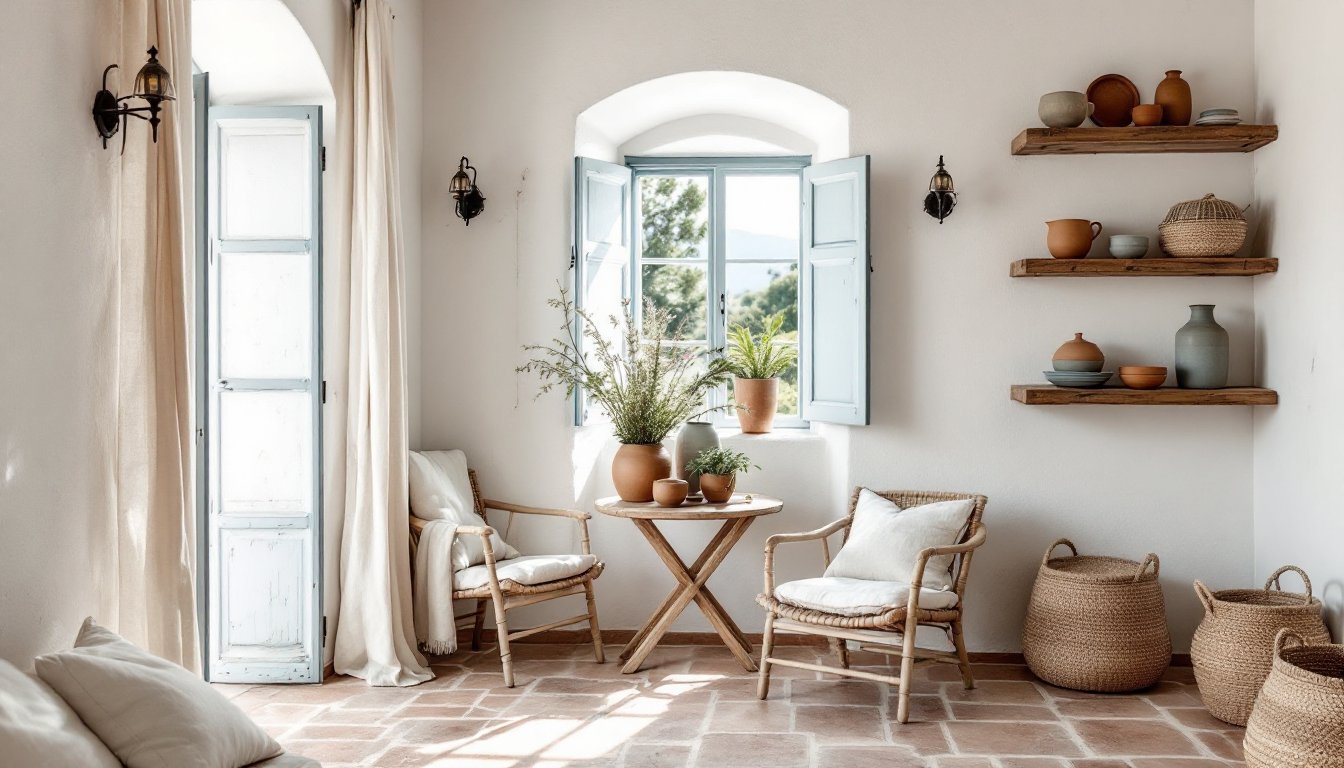
Greek interior design brings the warmth, simplicity, and timeless elegance of the Mediterranean straight into your living space. Whether you’re drawn to the crisp whites and blues of island villas or the earthy tones of mainland villages, Greek design celebrates natural materials, functional beauty, and an uncluttered aesthetic that feels both luxurious and lived-in. Unlike trendy styles that fade, Greek interiors emphasize quality craftsmanship and authentic details that age gracefully. This guide walks you through defining the style, sourcing key pieces, handling textures and materials yourself, and tackling budget-friendly DIY projects to transform your home.
Key Takeaways
- Greek interior design prioritizes simplicity, natural materials, and functional beauty with a warm minimalism rooted in Mediterranean tradition, avoiding both coldness and clutter.
- The iconic color palette combines warm whites, muted blues, and natural accents like terracotta and sage green, enhanced by matte finishes that mimic sun-faded, aged surfaces.
- Essential Greek design elements include handpicked wooden furniture, natural fiber textiles, handpainted ceramics, and wrought-iron details that emphasize craftsmanship over ornamentation.
- Texture is the heartbeat of Greek interior design, layering stone, terracotta, plaster, linen, and aged wood to create visual interest within a neutral palette.
- DIY projects like whitewashing walls, refinishing wooden doors, creating tiled accents, and installing open shelving can transform your space into Greek-inspired design for $200–500 over a few weekends.
- Sourcing authentic pieces from thrift stores and estate sales rather than new “rustic” décor ensures your Greek-inspired home feels genuinely timeless and lived-in.
What Defines Greek Interior Design
Greek interior design draws from centuries of island living, where form follows function and every piece earns its place. The style prioritizes simplicity without sacrificing character. Think whitewashed walls, arched doorways, stone floors, and handcrafted details, not minimalist coldness, but warm minimalism rooted in Mediterranean tradition.
The philosophy centers on natural light, ventilation, and living with the landscape rather than against it. Rooms breathe: clutter doesn’t exist. Furniture is sturdy and modest, often made from wood or iron, meant to last generations. Decoration comes from texture, material contrast, and the occasional handpainted ceramic rather than ornate moldings or heavy upholstery.
Greek design also embraces the concept of outdoor-indoor living. Courtyards, pergolas, and covered patios are extensions of the home, and interior spaces are designed to flow naturally toward windows and doors. This openness influences how you arrange furniture, fewer pieces, intentional placement, and an emphasis on sight lines. A room should feel inviting and spacious, never cramped.
Key Color Palettes and Finishes
The iconic Greek color palette revolves around whites, soft blues, and naturals, but it’s more nuanced than a simple blue-and-white scheme. Start with white or off-white as your base, not sterile white, but warm whites with slight cream or limestone undertones that reflect sunlight without glare.
Blues range from pale sky tones to deeper navy-influenced indigos, often seen in shutters, doors, trim, and accents. The blues you’ll encounter in Greek design tend to be muted and earthy, not bright or saturated. Complementary neutral shades include soft grays, warm taupes, and sandy beiges pulled from stone and earth.
Accent colors draw from natural sources: terracotta rust, ochre, sage green, and dusty rose. These appear in textiles, tiles, pottery, and painted wooden details, but always restrained. The finish itself matters, matte or flat paints that diffuse light are far more authentic than glossy finishes. A professional interior designer on MyDomaine advises that Greek interiors benefit from paint finishes that look slightly aged or sun-faded, even when freshly applied.
Where trim and doors appear, consider a semi-gloss or satin finish on wood to allow subtle sheen without looking polished. This mimics how wood darkens and develops patina over time in coastal climates. Avoid uniform, too-perfect color, Greek interiors accept variation and the weathered quality that comes with Mediterranean sun exposure.
Essential Furniture and Decor Elements
Greek furniture is handpicked, never overstuffed. You’ll typically find a few well-made pieces rather than a room full of them. Wood is the dominant material, olive wood, pine, and walnut, often left natural or painted in whites and soft blues. Furniture tends toward sturdy frames with simple joinery, no ornate carved details.
Key pieces include:
• Simple wooden tables with turned or tapered legs
• Low-backed seating, often cushioned in linen or cotton
• Wrought-iron or wooden shelving for open storage
• Ceramic vases, bowls, and jugs as both functional and decorative items
• Handwoven rugs in neutral tones or simple geometric patterns
• Vintage or reclaimed wooden doors and shutters repurposed as wall art or room dividers
Decor accents focus on craft and authenticity. Handpainted ceramic pieces, especially dinner sets, tiles, and decorative plates, are centerpieces in Greek design. Woven baskets serve practical and aesthetic purposes, storing blankets, textiles, or kitchen goods. Metalwork, whether oil lamps, candlesticks, or wall sconces, adds warmth without flash.
Incorporate natural elements: potted olive or lemon trees, herbs on windowsills, and cut flowers from local blooms. Plants soften corners and bring life to neutral palettes. Art on walls stays minimal, maybe a single framed botanical print, a collection of small ceramic pieces, or a carved wooden panel. The goal is to let materials and craftsmanship shine rather than crowd walls with decoration. Resources like Home Bunch showcase how luxury homes use restraint and natural materials to create Greek-inspired spaces that feel both timeless and fresh.
Textures and Materials for Authentic Style
Texture is the heartbeat of Greek design. Since the color palette is inherently neutral, visual interest comes entirely from surface variation. Layer matte finishes with slightly weathered surfaces, rough stone against smooth plaster, and woven fabrics against polished wood.
Stone and tile are non-negotiable. Limestone, terracotta, and marble appear in floors, walls, and accents. Natural stone shows veining, slight color variation, and an aged quality, embrace it rather than seeking uniformity. Terracotta floor tiles, especially in kitchens and entryways, add warmth and durability. They’re porous and develop patina beautifully over time. If replacing flooring is outside your budget, consider a high-quality porcelain tile that mimics terracotta’s texture and matte finish.
Plaster and whitewashed walls create soft, uneven surfaces that diffuse light. If your walls are drywall, a light sand finish followed by a matte latex paint approximates the look. Don’t aim for perfection, slight imperfections read as authentic, aged character.
Textiles should be natural fibers: linen, cotton, and wool. These materials breathe, age well, and feel tactile. Linen curtains in whites or soft neutrals filter light gently. Wool rugs in cream, gray, or soft patterns add underfoot warmth and sound absorption. A hand-knotted or hand-loomed quality matters, machine-made textiles miss the slight irregularities that give Greek interiors character.
Wrought iron and blacksmith metalwork appear in railings, door hardware, light fixtures, and decorative screens. The finish should be matte or aged, not shiny or new-looking. Wood, whether floors, beams, shutters, or furniture, contributes organic warmth. A distressed or naturally aged finish looks far more Greek than polished or sealed wood. The architectural details found in Greek Revival Architecture emphasize these material contrasts beautifully.
DIY Projects and Budget-Friendly Ideas
You don’t need to renovate your entire home to achieve Greek style. Strategic DIY projects can shift your space dramatically without major structural work or contractor costs.
Whitewashing and repainting is your most impactful first step. If walls are painted, prep them with light sanding, fill holes with spackle, and apply a primer designed for your existing finish. Use a flat or matte latex paint in warm white or off-white. A two-tone effect, white walls with colored trim or doors, is classically Greek. For doors or trim, choose a soft blue or sage green, sand lightly before painting, and use a semi-gloss finish for durability in high-traffic areas.
Safety reminder: Wear dust masks and safety glasses when sanding, and ensure proper ventilation.
Second, DIY tile or pattern work adds authenticity without needing a professional tile setter. Create a stenciled border on a plaster wall or floor with a simple geometric pattern using spray adhesive stencils and matte acrylic paint. Alternatively, source affordable ceramic tiles or peel-and-stick tile that mimics traditional Greek patterns for backsplashes or accent walls. Even one tiled wall in a kitchen or bathroom shifts the entire feel.
Third, refinish wooden furniture or doors. Found wooden doors at salvage yards or online marketplaces become stunning shutters, room dividers, or headboards. Sand them down, prime with a bonding primer, and paint white or a signature color. Wooden tables or chairs get the same treatment, sand, prime, and paint. This requires minimal tools: hand sander or orbital sander, paintbrushes, and safety goggles.
Fourth, create storage and display using open shelving. Install simple wooden shelves in white or natural finish, supported by wrought-iron brackets, to display ceramics, books, and woven baskets. Use a stud finder to locate wall studs, and mount brackets securely with appropriate fasteners for your wall type. Display handmade or vintage ceramic pieces here, no matching sets required, just beautiful individual items.
Finally, source decor items affordably. Thrift stores, estate sales, and online marketplaces have handmade ceramics, vintage linens, and wooden pieces at a fraction of new prices. Look for items with handpainted details, slight imperfections, and genuine age, these feel far more authentic than new-made “rustic” décor. A few quality, purposeful pieces beat a room full of new items.
Budget estimate (rough): A fresh coat of paint, $200–400: refinishing one wooden door, $50–150: DIY tiled accent, $100–300: shelving installation, $150–300: thrifted décor items, $100–500. Most DIYers can complete these projects with basic tools over a few weekends.
Conclusion
Greek interior design rewards thoughtfulness and patience. It’s not about speed or trend-chasing, it’s about intentional choices that feel timeless. Start with color, layer in texture through authentic materials, add a few handcrafted pieces, and let the style unfold naturally. Your home will feel warm, inviting, and distinctly yours.