
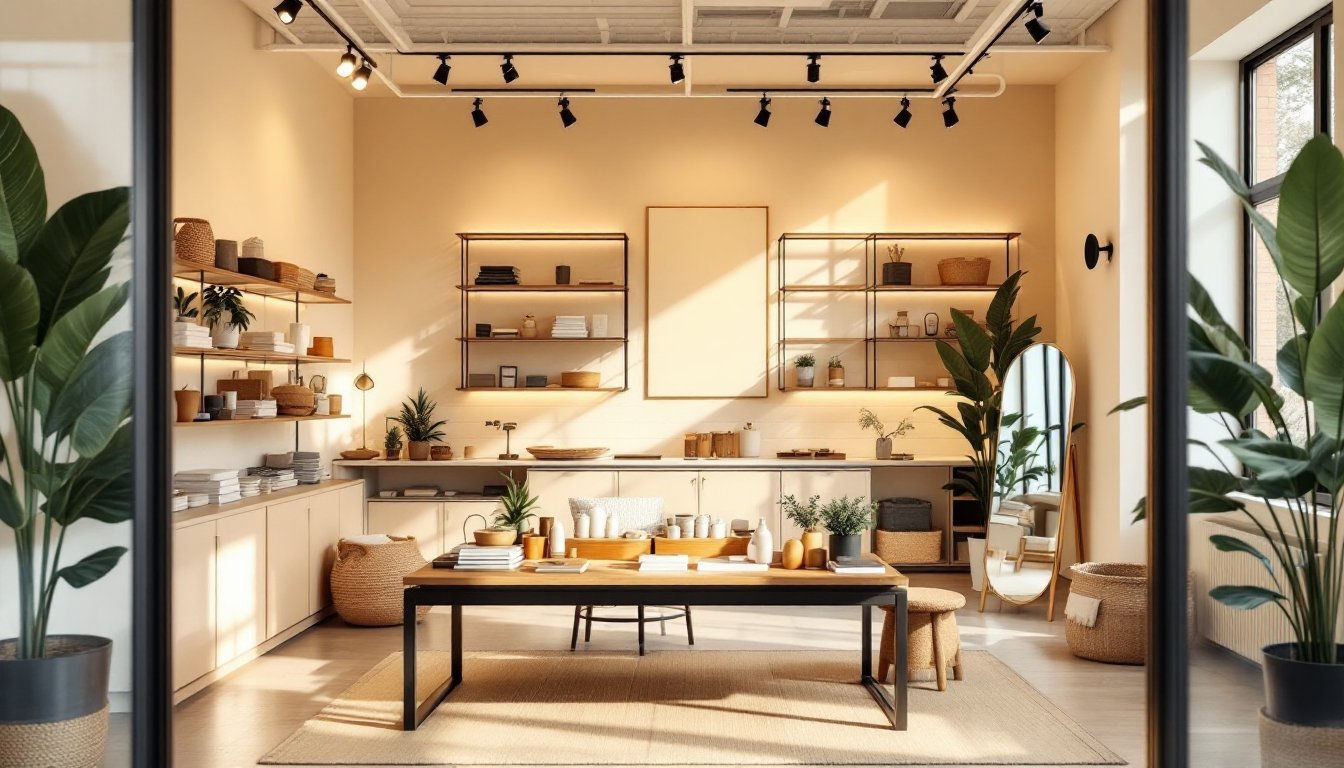
Whether you’re opening a new retail shop or refreshing an existing one, the layout and design of your space directly impact how customers shop and whether they’ll return. A well-designed shop interior isn’t about expensive flourishes, it’s about creating a functional, welcoming environment that showcases your products and encourages browsing. This guide walks you through practical interior design strategies to transform your retail space into one that works harder for your business. From entrance layout to product displays and lighting choices, you’ll find actionable ideas to create an inviting atmosphere your customers will remember.
Key Takeaways
- Shop interior design ideas should prioritize functional flow and clear sightlines over expensive décor, with the first six feet of your entrance being critical to drawing customers inside.
- A cohesive color palette of two to three main colors with layered lighting (ambient, task, and accent) creates depth, directs attention, and dramatically improves the shopping atmosphere.
- Place high-margin products at eye level, use negative space around displays to signal premium quality, and alternate between open and closed shelving to prevent visual monotony.
- Incorporate low-maintenance plants and natural materials like reclaimed wood to soften the retail environment, improve perceived quality, and create an authentic, welcoming space.
- Design your checkout area with clear sightlines, minimal visual clutter, and curated impulse items to streamline transactions and leave a positive final impression on customers.
Create an Inviting Entrance and Layout
Your entrance sets the tone for the entire shopping experience. Most retail experts agree that the first six feet of your shop are critical, customers decide within seconds whether they’ll step deeper inside. Make sure your storefront and entrance are clean, uncluttered, and visibly welcoming.
The layout itself matters more than décor. Avoid cramming too much into tight spaces. Use a logical flow that guides customers naturally through the shop, typically from the entrance to high-value displays, then toward the back or upper sections if you have a multi-level space. A U-shaped or loop layout works well for most retail environments, it encourages customers to walk the entire perimeter and discover more items.
Clear sightlines are essential. Don’t block views of the shop interior from the entrance. If customers can’t see what’s inside, they’re less likely to venture in. Remove tall displays or signage from the entry zone, and position at least one focal point, a well-lit display or feature wall, visible from the doorway. This draws people in and gives their eye somewhere to land.
Consider traffic flow in relation to dressing rooms, bathrooms, or customer service areas. Position the checkout counter where it’s visible but not so that it creates a barrier at the entrance. Many shops place checkout slightly to the side or back to keep the entry area open and inviting.
Choose a Cohesive Color Palette and Lighting
Color sets mood and influences how customers perceive your brand. Stick to a cohesive color palette of two to three main colors plus neutral accents, this prevents the space from feeling chaotic or overly busy. Neutral backgrounds (whites, soft grays, warm beiges, or soft greens) allow your products to stand out. Use accent colors sparingly to draw attention to key displays or reinforce brand identity.
The psychology of color matters in retail. Cool tones (blues, greens) tend to feel calm and trustworthy, working well for wellness or minimal aesthetic shops. Warm tones (reds, oranges, creams) feel energetic and welcoming, suited to lifestyle or food-focused retail. If you’re uncertain, test paint samples on walls during different times of day, natural and artificial light change how colors appear.
Strategic Lighting for Atmosphere and Visibility
Lighting is one of the most overlooked design elements, yet it dramatically affects both ambiance and product visibility. Layered lighting, combining ambient, task, and accent lights, creates depth and directs customer attention without feeling institutional.
Ambient lighting (like ceiling fixtures or soft pendant lights) illuminates the entire shop evenly. This is your baseline, and it should be bright enough for safe shopping but not so harsh that it feels like a warehouse. Aim for 300–500 lux (a measure of light intensity) for general retail spaces.
Task lighting highlights specific product displays or work areas, think spotlights on shelves or directional track lights over a featured collection. This helps customers see product details and draws the eye to items you want to emphasize. Warm white lights (2700K color temperature) feel inviting: cooler whites (4000K) feel more clinical and work better for technical or design-focused products.
Accent lighting uses decorative fixtures or uplighting on walls or architectural features to create visual interest. A simple accent light on a feature wall can make a huge difference in perceived quality and polish. Avoid mixing too many fixture styles, choose two or three types and repeat them throughout the space for cohesion. For design inspiration beyond basic retail, explore 1990s Interior Design Trends, which emphasizes bold color blocking and layered lighting effects.
Display Products Strategically with Shelving and Fixtures
How you display products affects what customers see and what they buy. The eye naturally travels from left to right and top to bottom, so place hero products or high-margin items at eye level in prime spots. Reserve upper shelves for lighter, decorative items: lower shelves for heavier or less frequently purchased products.
Mix fixture types to create visual rhythm and break up monotony. Combine closed shelving (with backing for a finished look and to hide clutter) with open shelving (to showcase products and make the space feel less dense). A wall of closed shelving can feel heavy: alternate it with a few open shelves or a display table below for balance.
Don’t overcrowd displays. Negative space (empty space around products) actually makes items feel more premium and easier to browse. A tightly packed shelf signals to customers that everything is discounted or low-value, even if it isn’t. Leave room to breathe between products, especially for items you want to highlight.
Consider investing in adjustable shelving systems, they let you adapt displays as inventory changes or seasonal stock shifts. Slatwall, pegboard, or modular shelving units are cost-effective solutions that photographers and stylists recognize as signals of intentionality and design savvy. Position shelving to define zones or pathways, gently guiding customers through the shop without signage. For more contemporary retail inspiration, modern home décor ideas showcase display strategies used in residential settings that translate beautifully to retail.
Use props and styling to add context. A folded sweater next to a similar hanging piece shows styling options. A plant next to home décor items demonstrates how products fit into real spaces. Group products by category, color, or size so customers can find what they’re looking for without feeling lost.
Incorporate Plants and Natural Elements
Plants soften hard retail environments and make spaces feel more human and welcoming. Living greenery improves air quality, reduces perceived noise, and creates a sense of calm that encourages longer browsing. They also photograph well, which matters if customers share photos on social media.
Choose low-maintenance plants that tolerate variable light and temperature, most retail spaces have inconsistent conditions. Snake plants, pothos, ZZ plants, and rubber trees thrive in these environments and don’t demand constant attention. Avoid fussy plants that’ll look sad and neglected within weeks: that defeats the purpose.
Position plants to soften corners, frame displays, or line pathways. A tall plant or tree in a corner makes the space feel larger and less angular. Trailing plants (like pothos or string of pearls) on high shelves add softness and visual interest without taking up floor space. Group small potted plants together for more impact than scattering them individually.
Natural materials beyond plants also improve perceived quality. Reclaimed wood shelving, natural fiber baskets for storage or styling, stone or concrete accents, and untreated wood fixtures all signal authenticity and craftsmanship. These elements don’t have to be expensive, simple wood shelves, woven bins, or a few stone decorative objects mixed into displays create warmth. Natural materials also give you more flexibility in color palettes: warm wood tones work with nearly any accent color.
Design a Functional Checkout and Customer Zone
Your checkout area is where transactions happen, but it’s also where customers form final impressions. Make the checkout intuitive: clear sightlines from anywhere in the shop, uncluttered counter space, and accessible payment terminals. Avoid stacking merchandise or paperwork at the counter, it looks chaotic and stresses both staff and customers.
Consider the psychology of impulse placement. Small, inexpensive items at checkout (candles, skincare samples, seasonal add-ons) can boost average transaction value. Stock these thoughtfully, don’t turn the counter into visual clutter. A small display of 3–4 curated items works better than a dozen choices fighting for attention.
Create a comfortable customer zone near checkout if space allows: a small seating area with a mirror (if you sell fashion), a sample station, or space to wrap purchases. This signals professionalism and shows you respect customers’ time. Even a single comfortable chair or a small table transforms the experience from transactional to personalized.
Staffing visibility matters too. Position your counter so staff can greet customers as they enter and aren’t hidden in a back room. A shop where staff is accessible and visible feels safer and more trustworthy. If you’re designing a smaller space, ensure at least one staff member can monitor the shop floor and checkout simultaneously without strain.
Finally, invest in quality point-of-sale tools and proper lighting at the counter. Customers notice if payment takes forever or if staff are squinting to process transactions. Good lighting and efficient systems streamline the checkout process, which improves the entire shopping experience. Browse interior design ideas and décor inspiration to see how successful retailers integrate technology without letting it dominate the space.
Conclusion
Transforming your shop interior doesn’t require a massive renovation budget, it requires intentional choices about layout, lighting, color, and product presentation. Focus on the fundamentals: create clear flow, use lighting strategically, choose a cohesive color palette, and display products with breathing room. Add plants and natural materials for warmth, and design a checkout area that’s both functional and welcoming. These principles work across retail categories, from fashion to wellness to home goods. Small improvements compound quickly: start with one or two changes and observe how customers respond. The most successful shop interiors feel natural and unhurried, not overwrought, and that’s something every business can achieve.